

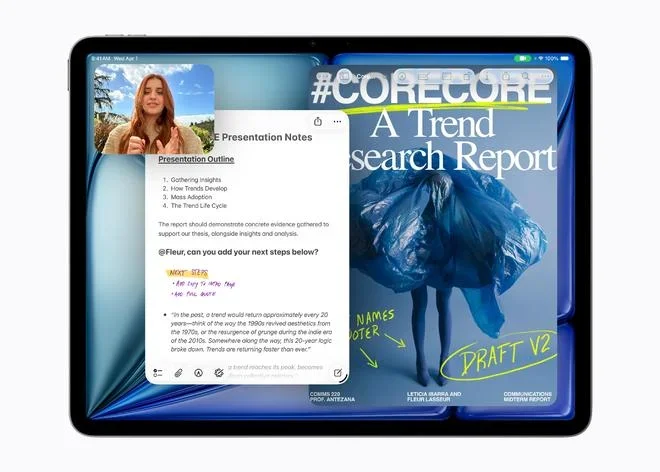
The M4 iPad Air, launched in March, has become a major booster for Apple’s tablet business.
According to the latest data from market research firm Omdia, Apple’s iPad captured 40.1% of the global tablet market in the first quarter of 2026, up significantly from 37.2% in the same period last year. Shipments reached 14.8 million units, a 7.9% year-over-year increase. Analysts attributed this growth primarily to the iPad Air.
What does this figure mean? Apple sold 2.5 times more iPads than second-place Samsung during the quarter. Samsung shipped 5.8 million units, down 12.6% year-over-year, holding a 15.7% market share. Huawei and Lenovo ranked third and fourth with 8.8% and 8.2% shares respectively, while Xiaomi came in fifth at 7.2%. In short, aside from Apple, other players are struggling to gain meaningful traction.
The 14.8 million shipments mark Apple’s strongest first-quarter performance since 2022, when pandemic-era demand was still boosting computer sales. Even without such external catalysts, iPad has maintained consecutive quarters of growth since spring 2024. Apple’s own financial results confirm this: tablet revenue reached $6.9 billion in the January-March period of 2026, up 8% year-over-year.
Strictly speaking, tablets weren’t invented by Apple. Before 2010, there were clunky and commercially unsuccessful attempts. But the first-generation iPad truly persuaded consumers to open their wallets, prompting competitors to swarm in and turning a niche category into a core battlefield for consumer electronics. Fifteen years later, Apple still firmly holds the defining position.
The strategy behind the M4 iPad Air is clear: bringing the latest chip to the mid-range product line, creating enough distance from entry-level models without undercutting the Pro series’ pricing ceiling. For users still holding older iPads, the upgrade rationale is compelling. For new users, the performance label outshines the price tag. In a cycle of slowing hardware iteration, this product strategy effectively drives upgrades.
However, the broader tablet market story isn’t exciting. Aside from Apple, most top players are contracting. Samsung’s double-digit decline suggests that Android vendors are facing an imbalance between investment and returns in tablets. Huawei, Lenovo, and Xiaomi combined hold less than 25% of the market, each stuck in specific price ranges or regional markets without forming a collective force.
Apple’s real challenge may not come from competitors but from itself. The software ecosystem of iPad—especially iPadOS’s productivity narrative—has long been criticized. Hardware sells well largely due to chip performance and brand inertia. As the performance redundancy of M-series chips becomes more apparent and upgrade cycles lengthen, how long the “sweet spot” iPad Air can sustain this momentum is a question worth watching.
But at least for this quarter, Apple proved there’s still money to be made in the tablet market. A 40% market share and a 2.5x lead over the nearest rival present a comfortable hand in the competitive landscape of consumer electronics.
